Bitcoin's network computes less than a year ago as miners turn to AI
Despite an October rise, mining difficulty is about 10 per cent below last year's level.
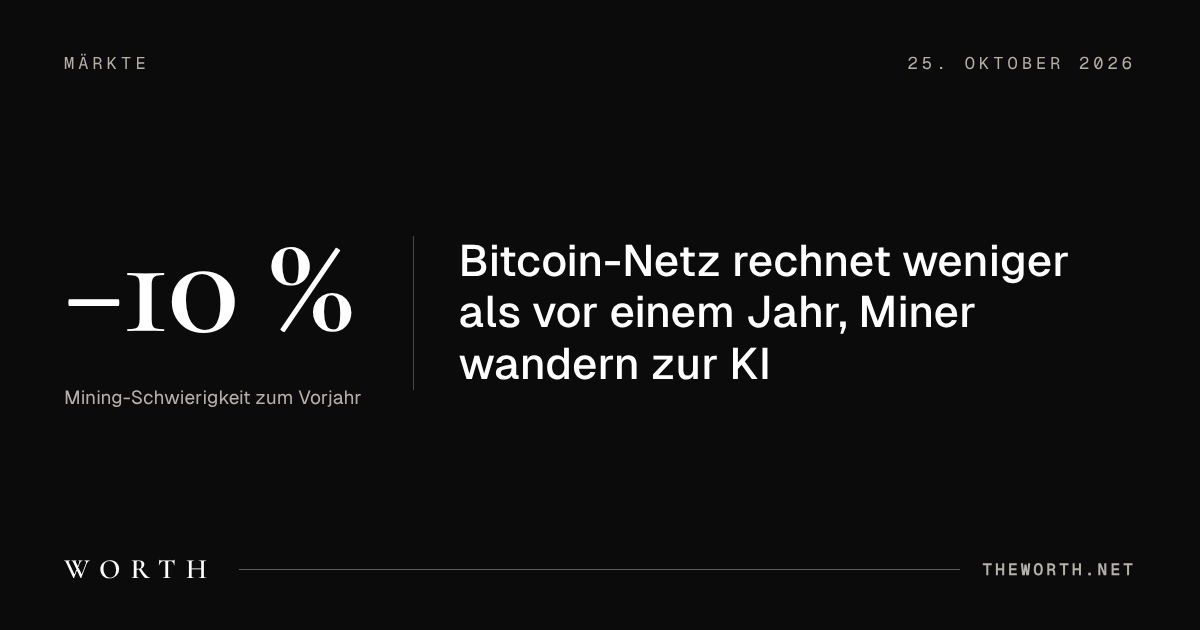
At block 971,712 on 16 October, mining difficulty rose by 5.9 per cent to 140.6 trillion, but it remains about 10 per cent below the 156.0 trillion of late October 2025. The network has not set a new high since its record in autumn 2025, while listed miners increasingly use their data centres for AI customers.
What happened
Difficulty is recalculated directly from the blockchain every 2,016 blocks and shows how much computing power secures the network. According to Pickaxe, computing power at the end of August was 17 to 22 per cent below the record, and listed miners have signed AI and high-performance computing contracts worth more than $70bn in total. Assessment: bitcoin mining and AI compete for the same sites with cheap power. Where that capacity goes is a signal for both industries.
What changes in practice
- Energy and sites
- Grid-connected data centres move to where they earn more per kilowatt hour, currently AI.
- Bitcoin holders
- Network security depends on computing power. It is lower than a year ago but still close to 1 zettahash per second.
Sources
- mempool.space: Schwierigkeitsanpassungen (Blockchain-Daten)
- mempool.space: Rechenleistung und Schwierigkeit, 3 Monate
- Pickaxe: Bitcoin hashrate enters first bear market amid AI pivot
- Bitcoin.com News: Hashrate slips 17% off record as miners chase AI