American voters punish data centres: power for AI turns political
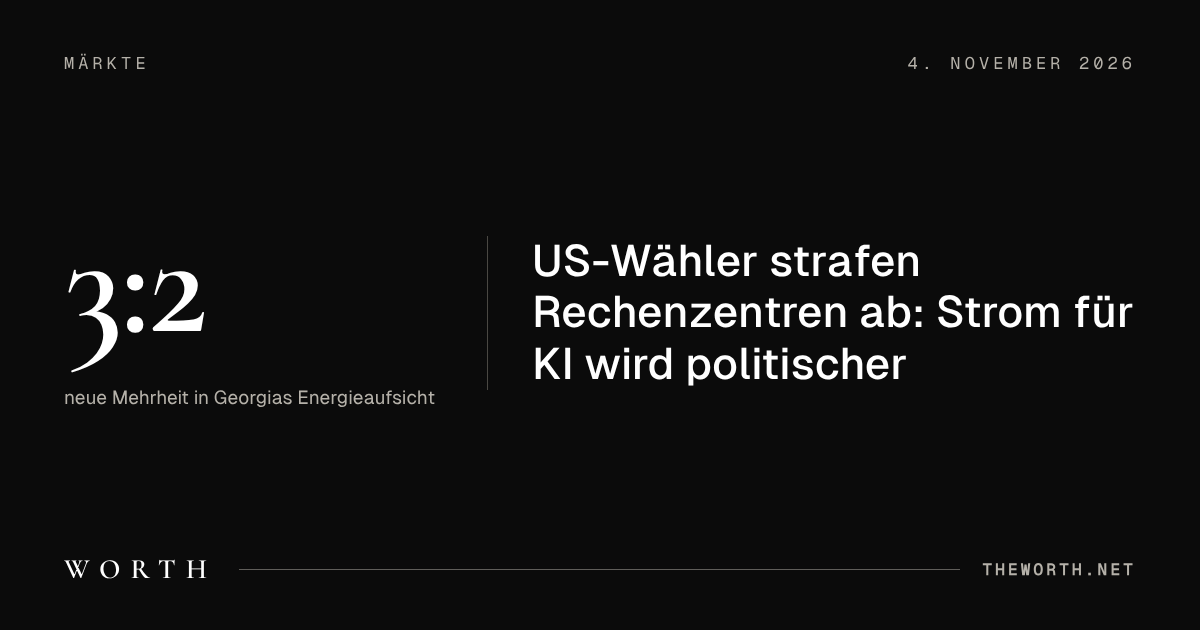
In the elections on 3 November Democrats won a majority on Georgia's energy regulator, and two Ohio towns voted to ban new data centres, according to preliminary results.
Electricity bills were the case against data centres in several races, and early results suggest it worked. Grid connections for the AI build-out in America are becoming more of a political bargain.
What happened
In Georgia the Democrats Peter Hubbard and Sheila Edwards won their races for the Public Service Commission, which regulates the utility Georgia Power. That gives them a 3-2 majority, the first in decades. Among other things the commission decides what data centres pay for power under their tariffs. Mr Hubbard said he wants to lower power bills rather than raise corporate profits; by his estimate Georgia is forgoing $3.5bn in taxes this year through incentives for data centres. Electricity prices in the state rose by more than 18% over three years, according to Heatmap and MIT. Shares in Southern Company, the parent, fell by just over 0.5% after hours. In Ohio a ban on new data centres in Trenton stood at 77% to 23% on partial results, and in Urbana at 73% of early votes. Grist reports candidates in Ohio and South Carolina who beat incumbents by criticising data centres. Assessment: the figures are from election night; final results are pending.
What follows
If regulators raise tariffs for large consumers or delay connections, costs per data centre rise and construction takes longer. That hits operators increasingly financing their build-out with bonds, as WORTH described on 3 November: their planning then depends more on elections. Sites in states with friendlier politics, or abroad, gain in value. For European companies buying cloud capacity from America, it is a cost factor that shows up in prices only with a lag. Assessment: whether the new majority in Georgia actually changes tariffs is open; the commission decides on power, Mr Hubbard says, not on taxes or water.
What changes in practice
- Cloud customers
- If power costs for American data centres rise, prices for computing capacity may follow with a lag.
- Investors
- Utilities and data-centre operators depend more on regulators who want to shield household customers from costs.
- Companies
- Those planning data centres must reckon with local votes; in Ohio towns voted for bans.
What to watch
- First decisions by the new majority on Georgia Power's tariffs
- Final results of the local votes in Ohio
- Statements by large cloud providers on site plans after the election
Sources
- Heatmap: Democrats win control of Georgia's energy regulator
- Grist: What a historic blue-wave midterm means for climate action and data centers
- Dayton Daily News: Area cities ban data centers – Election 2026 live updates
- Journal-News: Trenton data center ban passes with nearly 80% of the vote