Dear jet fuel: Ryanair weighs pay freezes, smaller crews and more AI
On 2 November Ryanair reported profit down 15 per cent to €2.15bn for the half-year to September and expects its fuel bill for 2027-28 to rise by about €2bn.
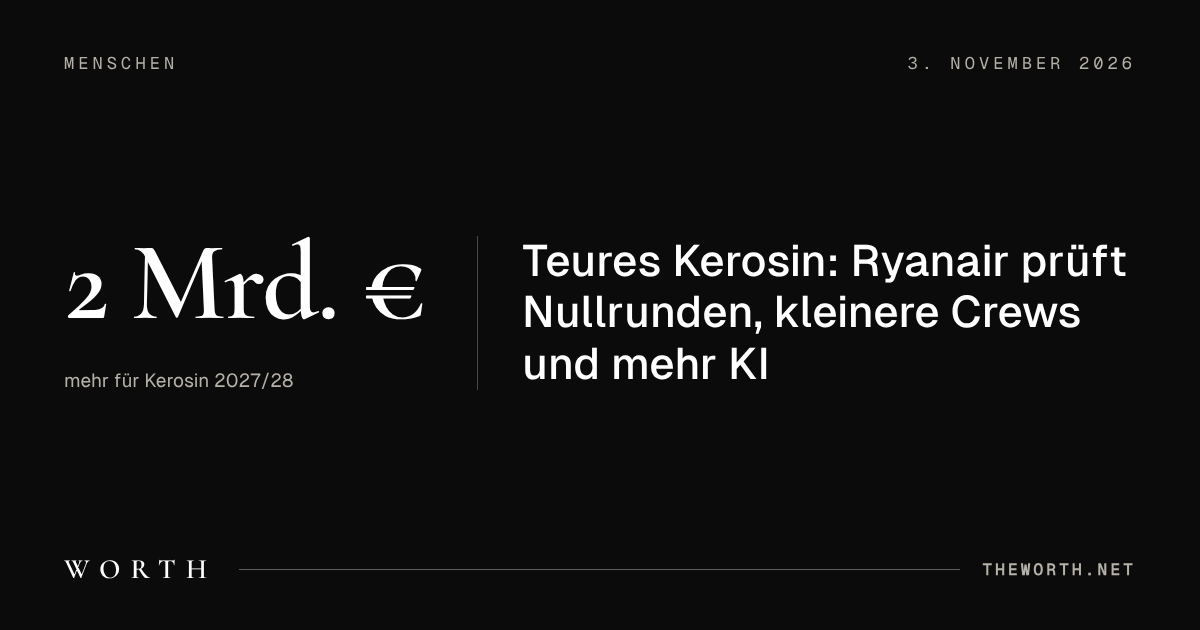
The high oil price is reaching employees: Europe's biggest low-cost airline lists temporary pay freezes and smaller crews as ways to save. Greater use of AI appears on the same list.
What happened
According to the half-year report, fuel costs rose by 15 per cent to €3.40bn, mainly because the price of the unhedged 20 per cent of jet fuel doubled. About 80 per cent of the current year's needs are hedged at roughly $67 a barrel, but only a quarter of 2027-28 at about $95. At current forward prices Ryanair expects its fuel bill for 2027-28 to rise by about €2bn. Passenger numbers rose by 6 per cent in the half-year to 125.8m, the average fare fell by 4 per cent to €55.70 and profit after tax fell from €2.54bn to €2.15bn. Staff costs rose by 5 per cent to €0.97bn, reflecting agreed pay rises and new multi-year labour deals. As countermeasures Ryanair names renegotiated airport charges, lower crewing ratios, possible temporary pay freezes as labour agreements expire, and greater use of AI. Neil Sorahan, the finance chief, told Bloomberg that everything was on the table, according to dpa-AFX. Ryanair cut its passenger target for the year from 216m to 214m.
What follows
The case shows how an energy-price shock feeds into wage bargaining. When the fuel bill rises by €2bn, airlines look for offsets in items they negotiate themselves: staff and airports. Assessment: for crews in Germany and Austria, what matters is when their agreements expire; Ryanair gives no figures on how many jobs smaller crews or AI might affect. Regional airports that depend on Ryanair will face pressure on charges. For travellers, fares in the current quarter are trending slightly above last year, according to Ryanair, with no visibility yet for spring. Lufthansa reports on 3 November; whether it names similar levers will show whether Ryanair is an exception.
What changes in practice
- Employees
- Ryanair lists temporary pay freezes as labour agreements expire and smaller crews per aircraft as possible savings.
- Airports
- Ryanair wants to renegotiate airport charges; sites that rely heavily on the airline have little bargaining power.
- Travellers
- Average fares fell 4 per cent in the half-year; for the current quarter Ryanair sees them slightly above last year.
What to watch
- Expiring labour agreements for Ryanair crews and the unions' response
- Jet-fuel price and hedge cover for 2027-28
- Whether Lufthansa and other airlines name similar cost levers
Sources
- Ryanair: H1 FY27 Results
- Grafa: Ryanair first half profit falls 15% to €2.15 billion
- dpa-AFX-Überblick Unternehmen vom 02.11.2026 (Ariva)
- Investing.com: Ryanair H1 FY27 slides, profit falls 15% on fuel